 Subscribe: Gist E-Paper
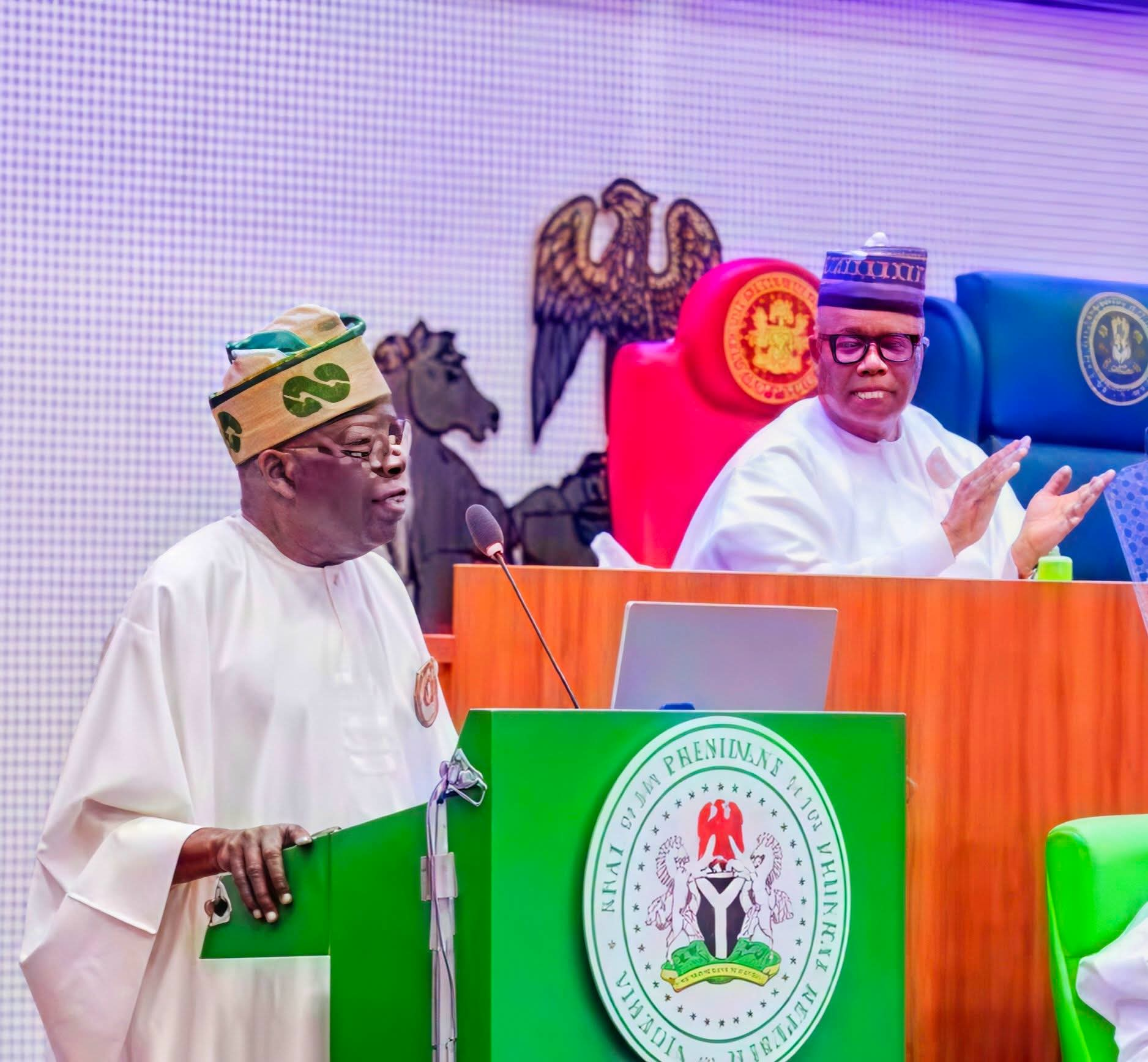
The Senate will transmit the State Police (Constitution Alteration) Bill, 2026, to President Bola Tinubu for assent this week, Senate Leader, Opeyemi Bamidele, has said.
Bamidele disclosed this in a statement issued by his Directorate of Media and Public Affairs in Abuja on Sunday.
He said 32 State Houses of Assembly had approved the proposed constitutional amendment, satisfying the requirement under Section 9(2) of the 1999 Constitution.
According to him, the remaining four State Houses of Assembly are expected to submit their reports before the National Assembly resumes on November 17.
Bamidele described the development as a major breakthrough in efforts to reform Nigeria’s policing system, following more than 15 years of unsuccessful attempts to establish state police.
He explained that the proposed amendment would provide for the establishment of both the Federal Police Service and State Police Services.
The Senate Leader said the framework was intended to promote community-based policing while maintaining constitutional safeguards and addressing concerns that state police could become ethnic or state-controlled armies.
He said the National Assembly was committed to responding to Nigerians’ demand for improved security through proactive, evidence-based legislation.
Bamidele stressed that the effectiveness of the legislature should not be measured merely by the number of bills passed, but by the impact of its laws on the lives and welfare of citizens.
He also highlighted several legislative achievements of the 10th National Assembly, including the Student Loan (Access to Higher Education) Act, 2024, and the National Social Investment Programmes Act, 2023.
According to him, the Nigerian Education Loan Fund has so far disbursed more than N204 billion to applicants across 323 tertiary institutions nationwide.
He said beneficiaries were drawn from 89 colleges, 108 polytechnics and 126 universities, adding that the intervention had helped reduce the risk of students dropping out of tertiary institutions because of financial difficulties.
Bamidele further listed the Minimum Wage Amendment Act, 2024, the Tax Reform Acts, 2025, the Investments and Securities Act, 2025, and the Electoral Act, 2026, among major legislative achievements.
He also cited the Nigerian Insurance Industry Reform Act, 2024, and the Regional Development Commissions Acts as measures aimed at strengthening economic development and public institutions.
On media practice, Bamidele reaffirmed the National Assembly’s commitment to press freedom, an open parliament and sustained engagement with journalists.
He, however, urged media stakeholders to confront what he described as irresponsible practices on social media, including character assassination, misinformation, blackmail and deliberate distortion of facts.
According to him, such practices undermine individuals and public institutions and could negatively affect national development.
He called on media organisations, including the Nigerian Guild of Editors, Nigeria Union of Journalists and Newspaper Proprietors’ Association of Nigeria, to play a stronger role in addressing the challenges.
Bamidele said information dissemination, whether through traditional media or social media platforms, must adhere to professional and international best practices while promoting national stability.