 Subscribe: Gist E-Paper

President Bola Ahmed Tinubu has called for urgent reform of the United Nations Security Council, demanding permanent African representation to reflect the realities of the modern world.
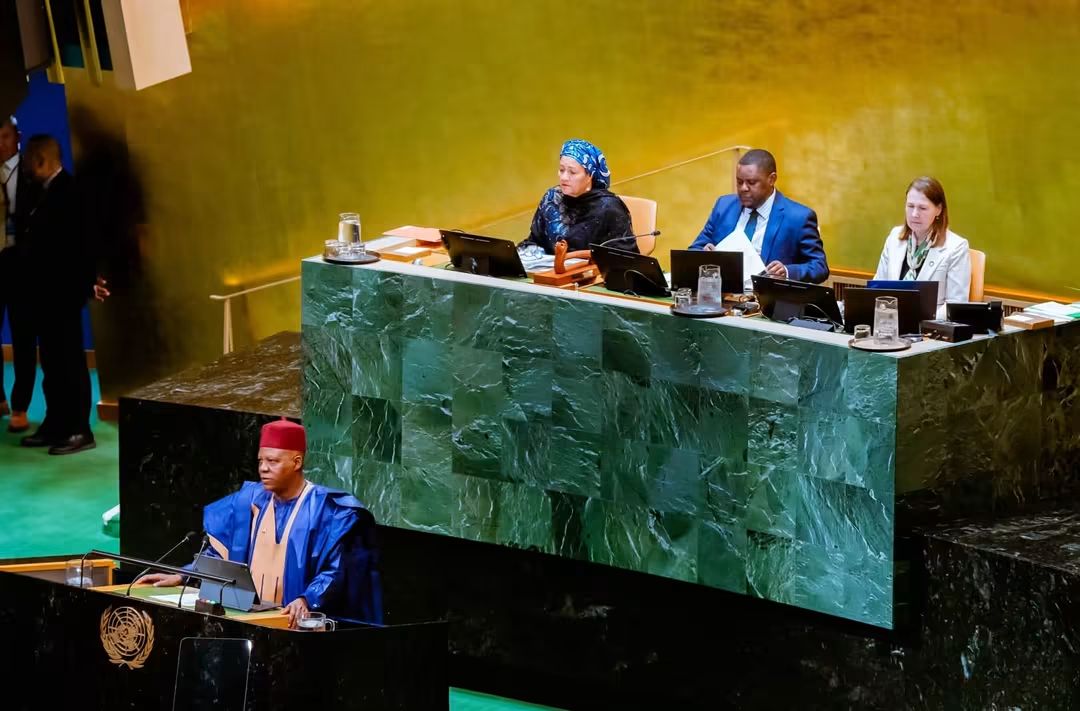
Tinubu made the call in his address to the General Debate of the 81st Session of the United Nations General Assembly in New York on Thursday. The speech was delivered on his behalf by Vice President Kashim Shettima.
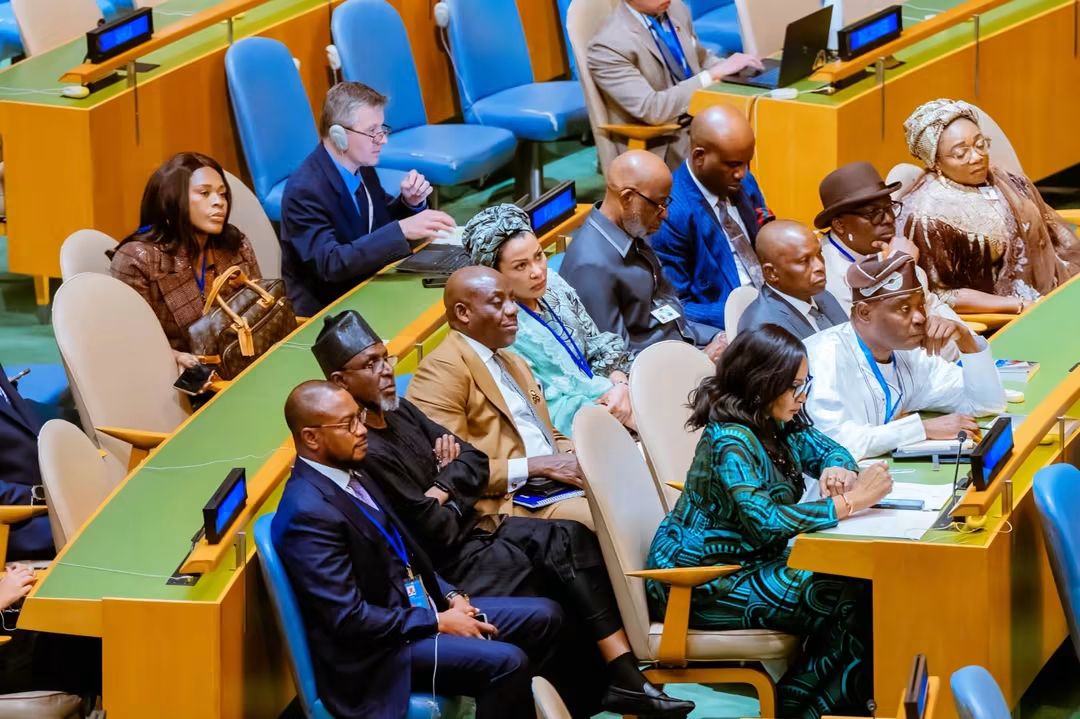
The President said the distribution of power in the Security Council could no longer reflect the realities of 1945, stressing that Africa should have a greater role in decisions affecting global peace and security.
He called for at least two permanent seats for Africa, with the full rights and responsibilities of permanent membership, including the veto for as long as it exists, as well as five non-permanent seats.
Tinubu said Nigeria was prepared to assume greater responsibility in international peace and security, citing the country’s contributions to peace operations and conflict-resolution efforts in Liberia, Sierra Leone, Darfur, Mali and The Gambia.
He also highlighted Nigeria’s role through ECOWAS, the African Union and Gulf of Guinea partnerships in promoting mediation, democratic governance, counter-terrorism and maritime security.
On the economy, the President said Nigeria’s foreign policy was anchored on sound macroeconomic management, stronger institutions, private-sector development and strategic public investment.
He said governments and international institutions could only earn public trust when their decisions translated into improved living conditions for citizens.
Tinubu also called for greater international action on climate change, rejecting what he described as a false choice between economic development and climate action in developing countries.
He said Africa contributes less than four per cent of global greenhouse gas emissions but bears disproportionate consequences of climate change.
The President reaffirmed Nigeria’s commitment to the Paris Agreement and said the country’s Energy Transition Plan targets net-zero emissions by 2060, while expanding access to affordable and reliable energy.
He called for greater technology transfer, capacity building and climate financing for developing countries, saying climate finance should be based on equity and shared responsibility.
On artificial intelligence, Tinubu urged countries to harness emerging technologies for human development rather than allow fear to prevent innovation.
He said Nigeria was investing in digital public infrastructure, broadband connectivity, research institutions, innovation ecosystems and technology entrepreneurship, while inviting global partnerships with the country’s young technology entrepreneurs.
The President also called for reforms to the international financial architecture, wider access to concessional financing and debt sustainability frameworks that take developing countries’ developmental needs into account.
He said many developing countries were spending significant resources on debt servicing at the expense of education, healthcare and infrastructure.
Tinubu identified the African Continental Free Trade Area as a major opportunity to strengthen regional value chains, expand intra-African trade, accelerate industrialisation and attract investment.
He urged African countries to move beyond dependence on raw-material exports towards value addition, manufacturing, technological innovation and knowledge-driven growth.
On security, the President called for stronger international cooperation against terrorism, organised crime, cyberattacks and illicit financial flows.
He said Nigeria’s experience in combating Boko Haram, ISWAP and other armed groups had demonstrated that military action must be complemented by education, economic opportunities, accountable governance and protection of citizens’ rights.
Tinubu also called for urgent diplomatic action to address conflicts in Sudan and other war-torn countries, stressing the need to protect civilians, facilitate humanitarian access and uphold international humanitarian and human rights law.
He said lasting peace required dialogue, reconciliation, inclusive political processes and stronger investment in peacebuilding, mediation and institution-building.
The President described Africa’s youthful population, natural resources, expanding markets and resilience as assets capable of making the continent a major driver of global growth.
He said a reformed and inclusive United Nations was necessary to respond effectively to the aspirations of present and future generations.
Tinubu pledged that Nigeria would continue to support cooperation over confrontation, dialogue over division and partnership over isolation.
He said restoring trust in multilateral institutions required nations to honour their obligations to one another and manage global changes with justice, wisdom and compassion.
The President urged the UN General Assembly to translate its deliberations into concrete action, stressing that cooperation remained essential to building a peaceful, just and sustainable world.